
The Klatt Shaw lab uses the adult zebrafish to determine immune cells and pathways driving regeneration.
WHO We ARE
Throughout its life, an organism is faced with constant internal and external insults that generate tissue damage. Recovery of tissue following injury is dependent on the complex coordination of cellular networks. The immune system represents a group of repair cells within this network. The behavior of immune cells can have long lasting effects, both beneficial and detrimental, to the regeneration of the injured tissue.
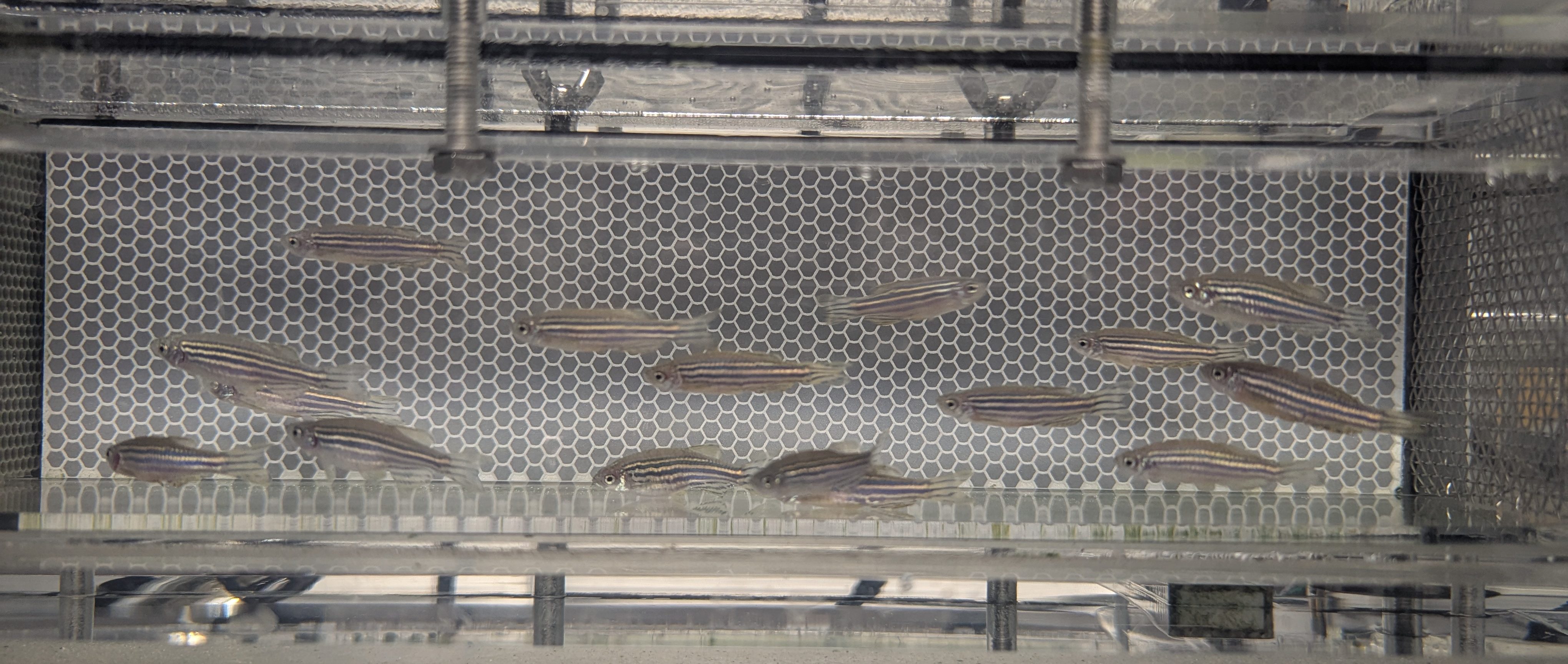
The Klatt Shaw lab utilizes the adult zebrafish, which is capable of regeneration following a complete severing of the spinal cord. This is in stark contrast to mammals, which possess limited regenerative capacity. Using the zebrafish, we can uncover the immune composition necessary to drive regeneration. Ultimately, the insights gained by our work will inform therapies for patients living with the debilitating aftermath of spinal cord injury or disease.
Listen to a podcast where Alejandro Sánchez Alvarado and Dana discuss regeneration here:
WHAT WE DO



TRANSCRIPTOMICS
To determine injury-induced gene expression, we perform analysis on new and previously published transcriptomic datasets. Analyses include the identification of previously unknown cell types and cross-species comparisons to identify regeneration-specific gene programs.
HISTOLOGY
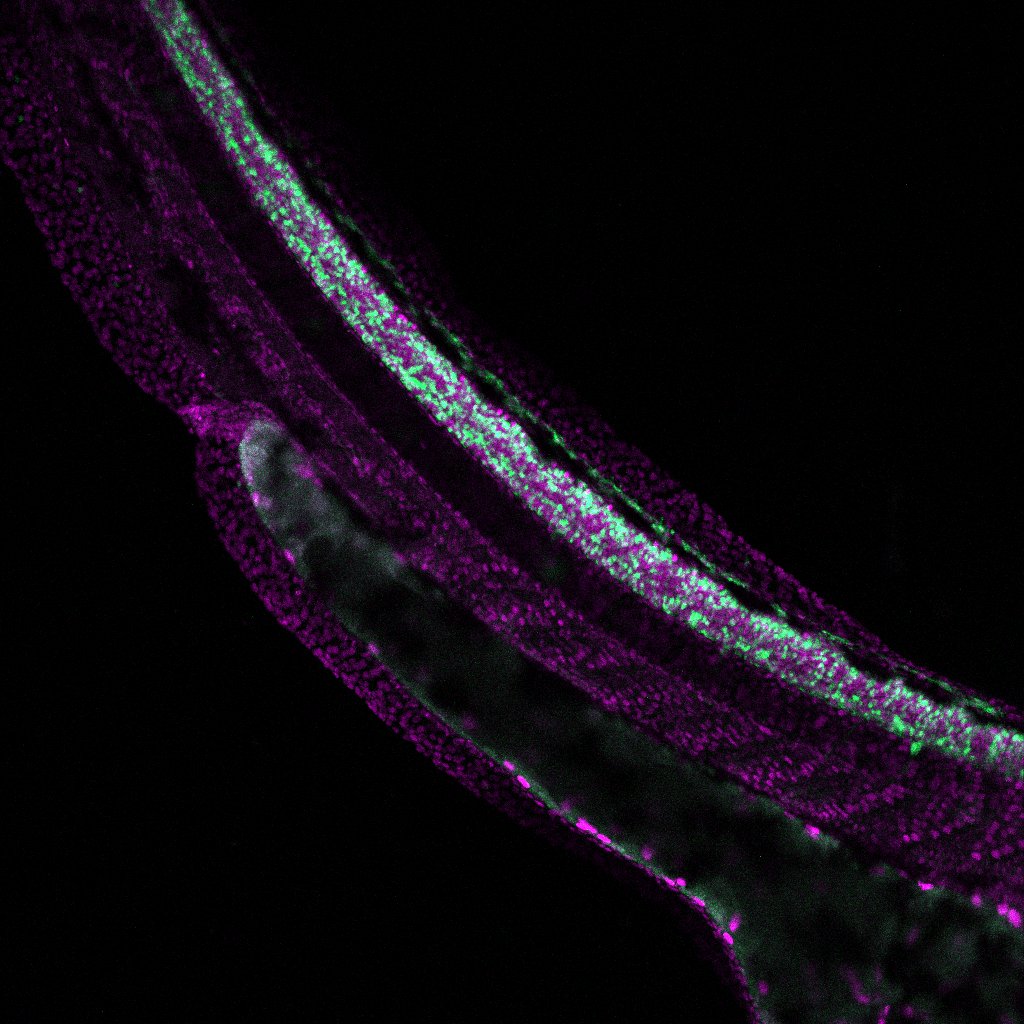
Science can be beautiful! We use histology of transcripts, proteins, and cells to visualize cell behavior before and after spinal cord injury. These snapshots give us insights to immune cell behavior during regeneration.
LOSS-OF-FUNCTION SCREENING
To determine how immune cells function during regeneration, we use specific ways to alter gene function. Think of regeneration like a tower of Jenga blocks – the only way to know if a block is important is to remove it and see if the tower is still standing.
IMMUNE CELL TRANSPLANTATION
Immune cells are uniquely sensitive to their environment. We use transplantation to ask how changing environment affects the behavior and regenerative capacity of immune cells.
GENERATION OF NEW TOOLS
We are always excited to try new things! With advanced genetics, we can push the boundaries for what is possible in regenerative neuroimmunology!
The Klatt Shaw lab is recruiting! Come join our team!
 Klatt Shaw Lab